GST Traits and Tendencies
Dr. Akhedan Charan
Additional Commissioner of State Tax
Although India is a “union of states,” it is also a strong government system. The Constitution splits the governing powers into two levels: the union government at the central level and the state governments at the state level. The Constitution gave the union the power to tax processed goods and services and charge import duties. States were also allowed by the Constitution to charge sales tax or VAT on goods. Additionally, the union taxed trade and business between states with CST, but the exporting state kept the tax. State governments also charge an entry tax on things that come into their areas. This was the system of taxes that the British left behind. It really was a very difficult way to collect taxes.
As a result of the union and states sharing economic power, there were many indirect taxes. The complicated tax system at the federal and state levels, with many indirect taxes, had buried costs for businesses. With different tax rates and structures, each state was autonomous. There were differences between the states in how taxes were set up and how much they varied. Due to tax on tax, this caused a chain reaction of higher taxes. Tradespeople in State VAT did not get any credit for CED or service tax, and the same was true for them. Paying taxes in one state did not give you any tax credits in another state. The prices of goods and services went up because of the fake inflation caused by the spreading of taxes.
In order to get rid of all the different taxes and their compounding effects, the government put in place MODVAT for production in 1986, CENVAT for excise in 2002, and State VAT for sales in 2005. It wasn’t perfect, though. When calculating CENVAT, some union taxes were left out. These included extra customs duties, surcharges, and more. In addition, CENVAT did not cover the VAT chain in delivery traffic. Only industry was allowed.
By replacing CED at the national level with State VAT, taxes on goods and services at the state level became much fairer. In addition, State VAT had some problems as well. Some state taxes were not directly collected. Taxes like the entertainment tax, the luxury tax, and others were not added to the State VAT.
It was also the CST’s spreading nature that caused distortion. They worked hard to make sure that all taxes worked together in the VAT system. To move items around the national market, though, there were too many obstacles. Procedures needed under VAT and CST were the biggest problem.
Although these problems existed, the government was working to fix them. Implementing GST was the next obvious step in the process. In the famous central hall of the Parliament, the President and Prime Minister of India announced the new tax on July 1, 2017. This was an important event.
A common misunderstanding is that GST is only VAT plus service tax. Instead of CENVAT, State VAT, and service tax, this is a better option. It changes the biggest kind of secondary taxes. Yes, GST is a big step toward making the changes needed to the country’s indirect tax system right.
Origins of GST and How It Has Grown Through Different Regimes
By creating the Matthai committee in 1953, the process of changing indirect taxes got underway. It accomplished its goal when, in 2003, the Task Force was created and its recommendation was to implement GST. The United Progressive Alliance (UPA) 1 and UPA II governments kept working on reforms and creating the GST. Lastly, the NDA II government put in place GST. Let us discuss the progress of GST under different governments.
NDA I Official Government
With the importance of tax changes in mind, the NDA I government led by Vajpayee did a number of things to clean up the indirect tax system at both the central and state levels. It created the Task Force on Fiscal Responsibility and Budget Management in 2003. The famous economist and government worker Vijay Kelkar led the task group by example. The task group released its report and a list of suggestions in 2005. With the exception of customs charge, it suggested that CENVAT, State VAT, and all other indirect taxes be replaced by a single GST. Ahead of schedule implementation of GST was also suggested. The Thirteenth Finance Commission, which was also led by Vijay Kelkar, had first suggested putting in place GST.
UPA I Officials
In 2004, the fourteenth Lok Sabha was elected, which changed the government. Expert economist and former finance minister P. V. Narasimha Rao was sworn in as India’s thirteenth prime minister. Finance Minister P. Chidambaram was appointed.
State VAT was picked up by Chidambaram where the NDA government had left it. After setting up State VAT successfully, he began working on GST. While presenting the budget for 2007-2008, he said that his government planned to start implementing GST on April 1, 2010.
He asked the current EC of State Finance Minister to make a plan for how the new tax would work and how it would be structured. The EC set up a joint working group on May 10, 2007, to look into how GST works in other countries. The center and the states were both represented in the group. Talking to and debating the issue with experts, the group sent its report to the EC on November 19, 2007.
The EC held a meeting on November 28, 2007. Meeting went over the joint working group’s report in great detail, and some changes were proposed. On April 30, 2008, the final version, called A Model and Roadmap for Goods and Services Tax in India, was given to the government.
The report felt good to the government. According to Chidambaram’s budget speech for 2008-2009, he was pleased with the progress made in making the plan for the launch of GST on April 1, 2010. Unfortunately, the GST wasn’t put in place until more than seven years after the original date.
The EC report included the framework, design, and schedule for putting GST into place. The tax department made some suggestions, which the government sent to the EC on December 12, 2008. The EC called a meeting to talk about the government’s ideas from December 16, 2008.
A committee of principal secretaries, secretaries of finance and taxation, and commissioners of trade taxes of states met to talk more about the ideas made by the revenue department. The EC agreed with the committee’s arguments on January 21, 2009.
EC once more put together a working group of executives from state governments. In collaboration with top government officials, the group presented its suggestions on how the GST should be set up. EC and Finance Minister Pranab Mukherjee talked about the problem of states losing money because of the phased-out CST on October 19, 2009.
UPA II Controlled Government
In 2009’s fifteenth general election, the UPA was re-elected. Premier Manmohan Singh stayed in office, but Pranab Mukherjee took over as union finance minister from P. Chidambaram. For the final switch to GST on April 1, 2010, the finance minister rationalized the rates of service tax and customs duty in his budget for 2009–2010.
Meanwhile, the EC kept talking with working group leaders. In addition, it talked about the issue within itself and with the union government. Lastly, on November 10, 2009, the EC sent in its report on the form of GST as a “First Discussion Paper for GST.” The purpose of the paper was to start a conversation and elicit opinions from those who matter. The homework had four different parts. Section I talked about how the VAT was put in place. Additionally, it talked about how GST could replace the current VAT. According to Part II, the steps for making GST were described. The detailed structure of GST was explained in Part III, and an appendix called Part IV contained a list of commonly asked questions and their relevant answers.
Authorities were trying to get most people to agree on how GST should work. Furthermore, the Thirteenth Finance Commission’s task group also put forward a number of suggestions regarding GST. When he presented the budget for 2010–2011, the finance minister changed the date that GST would start, saying that it would start on April 1, 2011.[1] The speaker stressed the importance of changing how the union and state indirect tax administrations do their job. The country as a whole started using the Automation of Central Excise and Service Tax project in 2010. Additionally, the government accepted a mission mode project to make commercial taxes in states computerized.
According to Pranab Mukherjee’s budget speech for 2011-2012, talks with the states had gotten a lot better over the last four years, and disagreements had been reduced. He wanted to present the Constitution (Amendment) Bill (CAB) during that Parliament session. Drafting the model GST laws for the central government and the states was already progressing.
Changing the Constitution was needed to make the dual GST work. Consequently, the government set up a joint working group. The head of the working group was the Gol’s additional secretary for revenue, and the co-chairman was the EC’s member secretary. Senior officials from the Department of Revenue, the Ministry of Law, and state governments were in the group.
The government wrote up a draft of the CAB and gave it to the EC. As a result, the government wrote two more CABs and sent them to the EC. The EC looked over the three CAB drafts at its meeting and sent them back to the government with its suggestions.
As a final step toward implementing GST, Finance Minister Pranab Mukherjee presented the long-awaited Constitution (115th Amendment) Bill, 2011 (hereafter, CAB 2011) in Lok Sabha on March 22, 2011. For review and report, the speaker of Lok Sabha sent the bill to the Parliamentary Standing Committee on Finance.
At the same time, on July 25, 2012, Pranab Mukherjee became President of India. However, it should be noted that GST did make a lot of progress while Mukherjee was finance minister.
After Mukherjee left, P. Chidambaram came back as finance minister and was in charge of GST. He talked with the EC about how GST was going. In his budget speech for 2013–2014, he told the Parliament what he had talked about with the EC. He said,
The vast majority of state governments agree that the Constitution needs to be changed. They also agree that the state finance ministers and the GST Council should write a GST law and that the central government should pay the states for any money they lost when the CST rate went down. [2]
The bill was looked at by the Parliamentary Standing Committee on Finance, which was led by Yashwant Sinha. Its report was turned in on August 7, 2013. The Ministry of Finance looked over the Standing Committee’s suggestions and agreed with most of them. The government changed the bill to include the Standing Committee’s suggestions and made a new draft of CAB 2013. It talked with the states about the updated CAB. After that, on September 18, 2013, a new draft was sent to the EC for its thoughts. After the EC sent its comments to the government, the government thought about them and added their suggestions to the draft. It was sent to the EC again on March 18, 2014, so they could look it over.[3] But the government couldn’t bring the bill back to Parliament for discussion and passage before Lok Sabha was dissolved, so the planned CAB 2011 expired.
NDA II Government
After the 2014 elections, there was a change in the government. Narendra Modi was sworn in as India’s fourteenth prime minister, and Arun Jaitley was named his finance minister.
In the past, when Modi was the chief minister of Gujarat, he was against putting in place GST. He had very different ideas before he became prime minister, though. The government began talking with the states, and in his first budget speech for 2014–2015, the finance minister told Parliament that the discussion about putting in place GST should end.
The government chose to write a new CAB. It was agreed to include all the previous suggestions, the demands of the state finance ministers that were still open, and the Standing Committee’s suggestions. This is the updated draft of the Constitution (122nd Amendment) Bill, 2014 (CAB 2014). It was sent to the EC on December 4, 2014. But the new bill did not follow all of the EC’s suggestions.
After that, on December 11, 15, and 16, 2014, the union finance minister, the head of the EC, and the finance ministers of the state governments met several times. After making a few small changes, the government signed off on the plan. On December 19, 2014, CAB 2014 was brought up in Lok Sabha. It was set by the government to start GST on April 1, 2016, which was also mentioned in the budget speech for 2015–2016. The bill was passed by the Lok Sabha on May 6, 2015. After that, on May 12, 2015, the Bill was brought up in the Rajya Sabha.
The opposition groups, led by the Congress and the Left Front, wanted the bill to be sent to a Select Committee of the Rajya Sabha. The members of the house did not agree with some parts of the bill that dealt with taxes. The bill was sent to the Select Committee on May 14, 2015. The Select Committee, which was led by BJP member Bhupendra Yadav, gave its report to the Rajya Sabha on July 22, 2015.
With some changes, the Bill was passed by a two-thirds majority in the Rajya Sabha on August 3, 2016, and then by the Lok Sabha on August 8, 2016. During his thank-you speech to the Rajya Sabha, the union finance minister said, “There has been major consensus building that has taken place.” I’m very grateful to all the opposition groups, but especially to Ghulam Nabi Azad.
The Congress also praised the work of the finance minister. “I’m glad FM acknowledged that it was the UPA government that first officially announced the intention to bring GST,” said P. Chidambaram, who used to be the finance minister.
All the states were sent the changed bill to sign it into law. Since CAB 2014 was passed by all parties without a single vote against, it only took 23 days for states to approve it. Assam was the first state to do so. The bill was sent to the President by the government after it was approved by 17 states. The presidential approval was given on September 8, 2016. [4]The Constitution (101st Amendment) Act, 2016, replaced CAB 2014. On September 12, 2016, a notice made the new act official. This is how the GST Council came to be. On September 16, 2016, the rest of the Act’s rules were made public.
Finally, GST went into effect at midnight on July 1, 2017, in the Central Hall of the Parliament. As the prime minister put it, GST will lead to a system that is open, easy to use, and checks on graft. The government said that GST was the most important change to taxes since independence. “The launch of GST is the best example of how cooperative federalism works and how well Indian democracy works.”[5] The foreign media also liked that GST was put in place. The Gol was praised by the New York Times[6] for leading the way in changing taxes.
The concept of GST
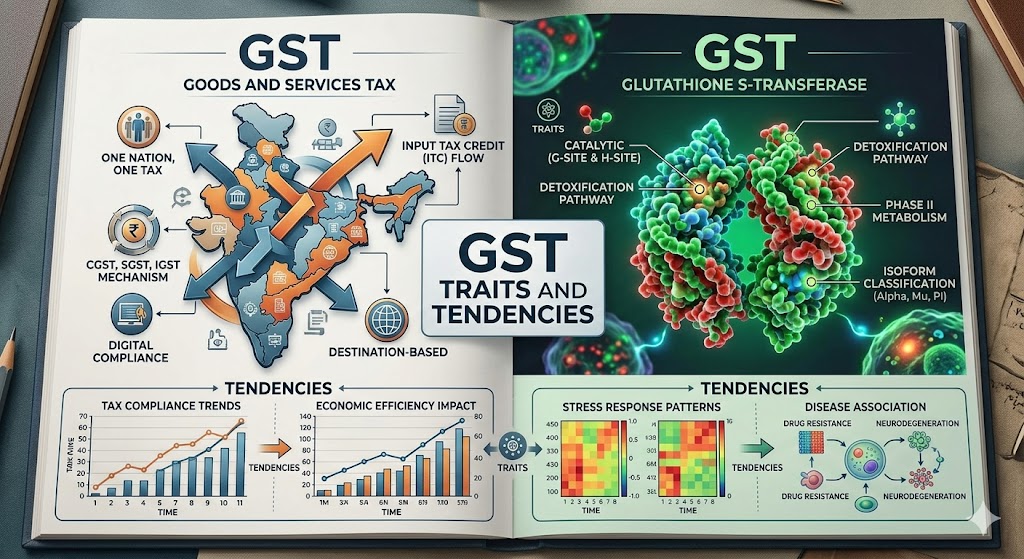
‘One nation, one tax’ is what GST is built on. One good thing about it is that it covers the whole country. The new tax made one market out of the 1.3 billion people who live in the country and its $2 trillion economy. GST is a single tax that is charged on the sale of things and services, or both, from the person who makes or provides the service to the person who buys them. The tax is based on where the goods are being bought. The ITC is paid at each stage and can be used at later steps of adding value. This is a tax that is only charged when value is added at each step. So, the last person who buys something only has to pay the tax that the dealer in the supply chain charges, plus any set-off benefits from earlier steps in the process. For GST to work, there should be only one tax and one assessing worker for each person. It is built on IT and will help get rid of Inspector Raj. It combined a number of taxes and fees to make the market more uniform.
The EC used a made-up case to explain how GST would work in its first discussion paper on GST in India. Let’s say there are three people involved in the process of making and selling something: a producer (P), a wholesaler (W), and a retailer(R). These people are making something that has an 18% GST rate. In this line of events, the producer sells his goods to the wholesaler. The things are sold by the wholesaler to the retailer. The maker spends ₹10,000 on supplies and ₹1,800 (18% of ₹10,000) on taxes. It costs him ₹10,000 to make something, but he adds ₹ 3,000 to its value. When the producer gives the goods to the wholesaler, the gross GST value is ₹ 2,340, but the producer will pay ₹ 540 GST after deducting ₹ 1,800 GST paid on his inputs (ITC).
ITC of ₹2,340 will be taken off of the producer’s gross GST of ₹2,700 when the wholesaler sells the same goods with an extra ₹2,000 worth of value. This means that the wholesaler will only pay net GST of ₹ 360. In the same way, the store will sell the same things with an extra ₹1,000 worth of value. He will only pay 180 rupees in net GST because he will deduct 2,700 rupees from the gross GST of 2,880 rupees that he paid to the wholesaler.
So, the producer, the wholesaler, and the retailer will all pay a total of ₹1,080 in GST (₹540+₹360+₹180). This is after subtracting the GST paid at earlier stages. So, the total amount of GST a product has to pay will be a lot less than the taxes it had to pay before. Table 10.1 shows how to figure out the net GST.
GST vs. VAT
Before GST, there was VAT. VAT was charged at different stages of making a product, but GST is charged when things and services are sold. But VAT was only charged on the things that were sold. For services, it was different because they were subject to service tax. Goods and services are both subject to GST at the same rate. Table 10.2 shows what the difference is between VAT and GST.
Taxes That Are Rolled Into GST
The EC looked at all of the secondary taxes that the center, the states, and the local governments charged to see if they could be rolled into the new GST. Last but not least, the new tax combined 17 indirect taxes and 23 cesses into a single tax.[7] Table 10.3 shows the names of the national and state taxes that have been merged into GST.
Taxes apart from GST
A new tax called GST has been put in place and is now being charged on all things and services, except alcohol that people drink. It will apply to five types of petroleum goods from the date that the GST Council chooses. These are crude oil, gasoline, diesel, natural gas, and aviation turbine fuel. Let us look at the taxes that GST doesn’t cover (Table 10.4).
Table 10.1
Source: indirect tax reform in india, yashwant Sinha and vinay k. shrivastav
Table 10.2: VAT vs GST
Table 10.3 : Taxes subsumed under GST
Source: http://www.gstcouncil.gov.in/brief-history-gst
Table 10.4 : Taxes outside GST ambit
Source: http://gstcouncil.gov.in/sites/default/files/01092018_GST_PPT_An_ Update.pdf
Petroleum products and alcoholic beverages
In recent years, petroleum products and alcoholic beverages intended for human consumption have become key sources of revenue for several states. Almost all of the state governments expressed their desire to exempt certain products from the Goods and Services Tax (GST).
There was a lack of clarity regarding the impact that the new tax will have on their exchequer. Indeed, they were concerned that the Goods and Services Tax (GST) would entail a decrease in the amount of money they collected. As a result, the Goods and Services Tax (GST) regulations in CAB 2011 did not apply to alcoholic beverages intended for human consumption as well as five petroleum products: crude oil, gasoline, diesel, natural gas, and aviation turbine fuel. The Standing Committee on Finance suggested that the Goods and Services Tax (GST) should continue to apply to petroleum products. When it comes to petroleum crude, high-speed diesel, motor sprit, natural gas, and aviation turbine fuel, Section 5 of CAB 2011 stipulated that the GST Council should provide a recommendation about the date on which the Goods and Services Tax (GST) will be implemented.
In light of this, the government decided to exempt alcohol for human use from the Goods and Services Tax (GST). One of the provisions that was included in the Constitution (101st Amendment) Act was a clause that said that the five petroleum products will be subject to the Goods and Services Tax (GST) beginning on the date that was proposed by the GST Council.
All commodities and services, with the exception of alcoholic beverages intended for human consumption and the five petroleum products, were subject to the Goods and Services Tax (GST) after it was finally implemented.
Tobacco and Products Composed of Tobacco
Despite the fact that tobacco and tobacco products are subject to the Goods and Services Tax (GST), the union government has maintained the authority to impose taxes on these items. A further advantage would be that the national government would have the authority to impose an excise duty on these products.
The process of implementing the Goods and Services Tax (GST) took five decades to complete. In his speech at the launch of the Goods and Services Tax (GST), Pranab Mukherjee, who was serving as President of India at the time, stated, “This historic moment is the culmination of a 14-year-long journey that began in December 2002.”[8] NDA 1 was the one that initiated the work on the value-added tax (VAT), but the credit for its implementation was given to the UPA I. The Goods and Services Tax (GST), which had the potential to be a much more significant game changer, was given to NDA II because they were in power when the final moment arrived. It should not be forgotten, however, that every government that was in power at the time made a significant contribution to it from their own perspective.
[1] Gol, Budget Speech, 2010–11
[2] Gol, Budget Speech, 2010–11
[3] Annual Report for 2015–16 from the EC of State Finance Ministers
[4] The Economic Times, April 13, 2017
[5] Sinha and Shrivastav, ‘ Indirect Tax Reform in Inida’
[6] Shaikh, “GST Roll-out.”
[7] TNN, “Chidambaram Says It Should Be Called “RSS Tax””
[8] Pranab Mukherjee, who was serving as President at the time, on the introduction of the Goods and Services Tax